A reflection by Petar Druskovich
A note before you read: Sandra has already shared her side of this story: the grief, the guilt, the questions she carried on those front steps. This isn't that story again. This is what it looked like from where I stood. The same season, a different set of eyes, a father trying to make sense of a world I never asked to enter.
This post includes outdated and hurtful words that professionals used in the 1980s. They appear in quote marks, as the words we were given at the time.
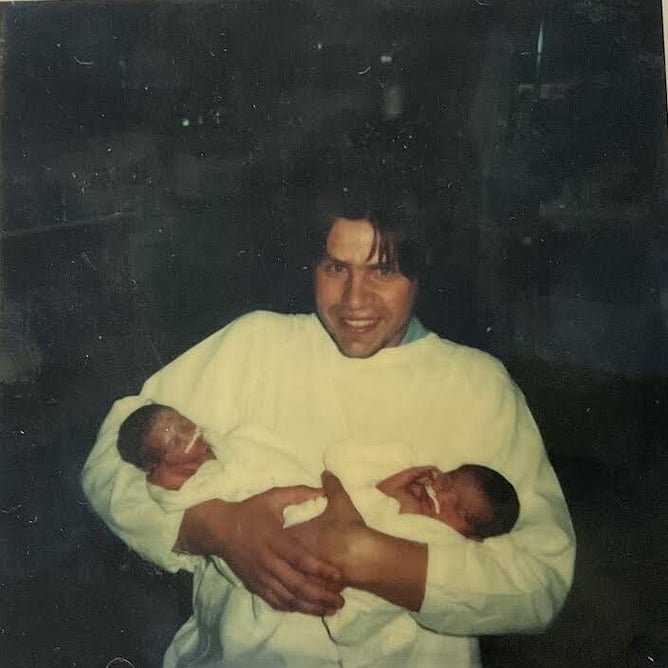
Petar with Amanda and Sonia in the neonatal unit, 1979.
I still remember sitting in the psychologist's office, hearing the words, and then reading them. As toddlers, Amanda and Sonia had been described as "globally developmentally delayed". Now, after further assessments, Sonia had a diagnosis within the "moderately retarded range of intelligence" and Amanda within the "mildly retarded range of intelligence". The twins were about six years old.
As I read these assessments, all I could see were the words "Amanda would be placed in a special class for backward children" and "Sonia would need to be placed in a special school for mentally retarded children". Those were the words professionals used back then.
I couldn't believe it. This is not happening, I thought. Then came a different kind of doubt. Had I failed them somehow, as their father? Had I not protected them enough, provided enough, done enough? Slowly, my disbelief turned into a quiet blame I carried alone, the kind you don't say out loud.
Then I was given an option I have never forgotten. The twins, I was told, might be best placed in a residential facility, so we could get on with our lives.
I sat there, and something in me shut down.
How does a father who loves his children even begin to consider something like that?
For me, there was nothing to consider. The twins were my family. Like any other children, they would live with their parents, in their community, surrounded by people who loved them.
When it was over, I wanted to get out of that office as fast as I could. I was confused. I couldn't grasp what we had just been told. The drive home was full of silence. It was all too much to take in, and none of it made sense. So I did the only thing I could. I put it in the too-hard basket. I had no idea what any of it actually meant.
When the twins were born, our family had celebrated with us. But when the news came that they were "retarded", that celebration turned into confusion and disbelief. One family member said they would be fine; they just needed more discipline. Another said we were very young parents and were probably overreacting. I felt as though they thought I was making it up.
Yet all I could see were two beautiful girls whom I loved dearly.
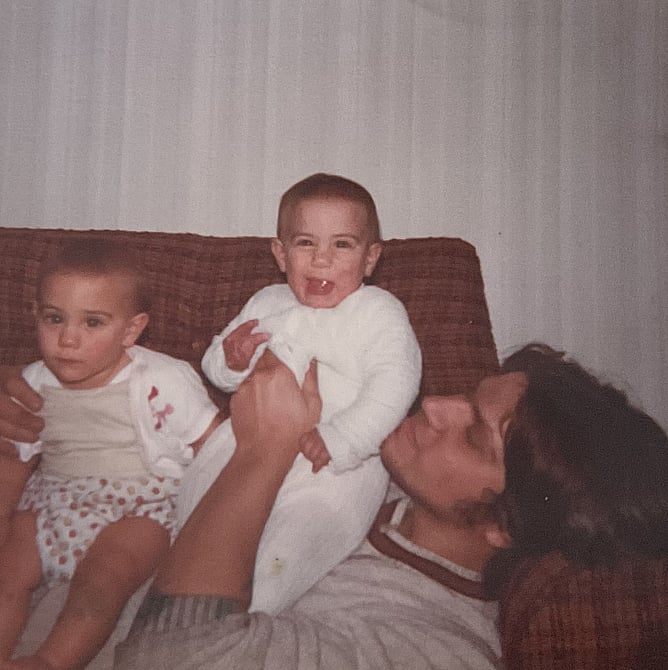
Petar with Amanda and Sonia, about 1980.
Until then, my world had been about being a dad: providing, nurturing, keeping them safe, and trying to be the best father they could have. After the diagnosis, our lives filled up even more with appointments with clinical psychologists, specialist teachers, physiotherapists and occupational therapists.
Even before that day in the psychologist's office, I remember visiting the twins at their special needs kindergarten for the first time. In the classroom I saw other children with disabilities, some in wheelchairs, some who I later learned had Down syndrome. I remember thinking, my twins don't belong here. Part of me still believed the psychologists had got it wrong.
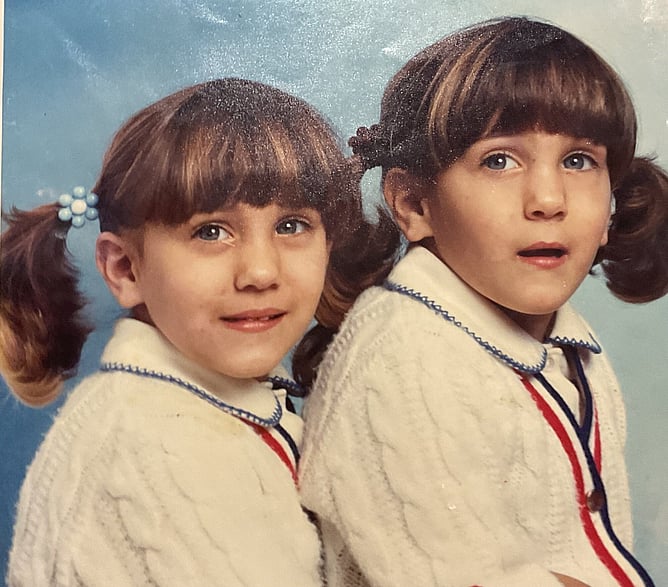
Amanda and Sonia, about 1983.
Looking back now, I can see that I had was swept into a world that was completely foreign to me, a world I did not want my children to be part of.
What I didn't know yet was how much that world would teach me.
A word to other dads
If you're a father reading this, you may have your own version of that room. That conversation. That moment when someone else's words tried to define your child. If so, I want you to know something: it's okay that you didn't have the words for it either. Men aren't always given the space to grieve, to question, to admit we were scared. But we carry it anyway.
I'd like to hear from other dads walking this road. Not to compare stories, but because I know how isolating it can feel when everyone assumes your partner is the one processing this, and you're just expected to hold things together. If that's you, get in touch through our contact page or give me a call on 021 248 1007.
And if you know a dad who needs to read this, please share it with him.
Let's talk, father to father.