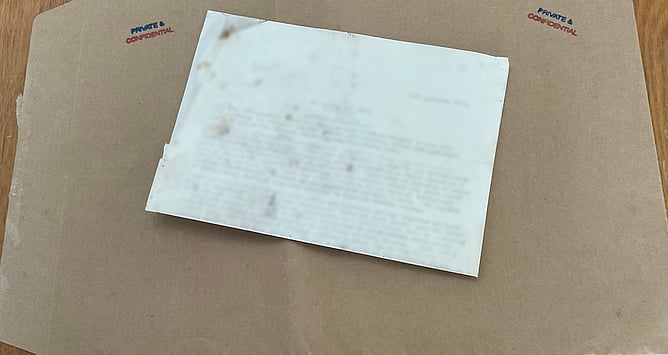
“One of many letters, 1986”
A note before you read: this post shares a real diagnosis moment, including grief, self-blame, and questions of faith. Please take care of yourself as you read, and know there's no obligation to read further than feels right today.
The Assessment
On a mild autumn day in 1985, I sat on the front step of my house, clutching a brown envelope. My eyes fixated on the stamp in the corner: "Psychological Services – Department of Education."
Inside were the results of recent assessments for my twin daughters, Amanda and Sonia. With trembling hands, I slowly opened it, and the words I read shattered my world.
My gaze was drawn to the bold heading: PSYCHOLOGICAL ASSESSMENT.
I was confronted with stark, clinical language:
"Sonia is 2-3 years behind her chronological age; her IQ is between 35-45, placing her in the moderately retarded range of intelligence."
"Amanda is functioning at the lower end of the mildly retarded range of intellectual development, with an IQ between 48-58."
Both girls were noted to be 3-4 years behind their peers in language, academic, and social development.
As I read the recommendations, it felt like a knife had been plunged into my stomach and was slowly being twisted. Amanda was to attend a special class for "backward children," while Sonia needed to be enrolled in a special school for mentally disabled children.
Words cannot capture the depth of emotional pain that washed over me as I grappled with what lay ahead.
The Years Leading Up
Amanda and Sonia were born in 1979, at just 34 weeks gestation, deemed "small for their dates." Amanda weighed 2180 grams, Sonia just 1720 grams. They spent weeks in the neonatal ward until they gained enough weight to come home.
Despite some early physical health challenges, they met all their developmental milestones — except for language.
What followed were years of conflicting opinions from health and educational professionals. Amanda and Sonia were given the label "global developmental delay."
I naively thought that if something was delayed, it meant they would eventually catch up.
One pediatrician assured us they would "come right" and discharged them from his care. Others suggested the language delay might be due to their early ill health, or that it was typical for identical twins.
One medical professional claimed Amanda and Sonia's language delay was the result of them "living a sheltered existence due to the mother being young and this being her first pregnancy." This same professional strongly asserted, "There is nothing wrong with these girls, and other professionals should keep their opinions to themselves."
The conflicting information left me grasping for hope — holding on to the belief that the gap would eventually close, that the girls would "come right."
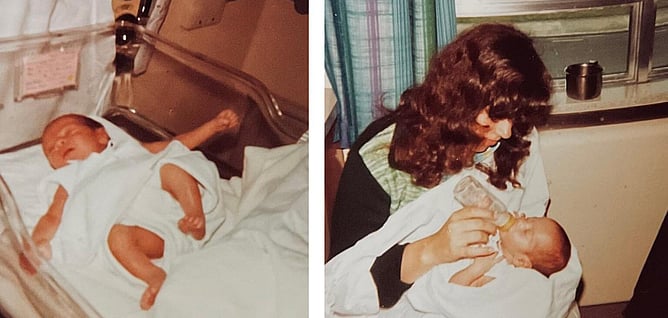
“Sonia (left) and Amanda, with me, in the neonatal ward, 1979”
The Door Slams Shut
Sitting on those front steps, the words "mentally retarded" felt like a door slamming shut on the future I had envisioned for my daughters.
The belief that Amanda and Sonia would catch up with their peers became an unreachable dream. The life I had imagined — school concerts, graduations, careers, independence — dissolved before my eyes, replaced with an unknown, uncertain future.
I felt overwhelming loss, grief, and uncertainty about what this diagnosis meant for Amanda and Sonia, and for our family.
I also felt guilt and shame, wondering if it was something I had done. Was I to blame?
I wondered where God was in all of this. Had I done something wrong to deserve this?
Loss and uncertainty surrounded me. What does life look like raising twins with intellectual disabilities? How do I navigate this new journey?
Looking Back
That moment is vividly embedded in my memory as if it were yesterday. Even now, I can feel the same intense wave of emotional pain washing over me.
Today, my twin daughters are in their mid-forties.
As I look back, I can see how that moment on the front steps redefined my life and shaped my understanding of love, resilience, faith, purpose, and values.
Parenting Amanda and Sonia has been a complex journey filled with highs and lows, laughter and tears, challenges and deep, fierce love. This journey has shaped every aspect of my life and our family's life — including Amanda and Sonia's younger brothers, our extended family, social networks, friends, and faith.
Over the years, their diagnoses have grown more complex. In their twenties, both were diagnosed with schizophrenia and developed serious physical health concerns. Today they live in separate residential facilities. Sonia can no longer communicate with us due to her illness; Amanda can. We visit as often as possible, carrying ongoing grief alongside fierce love and pride in their courage and resilience.
They are beautiful women — courageous, resilient, determined. We love them dearly.
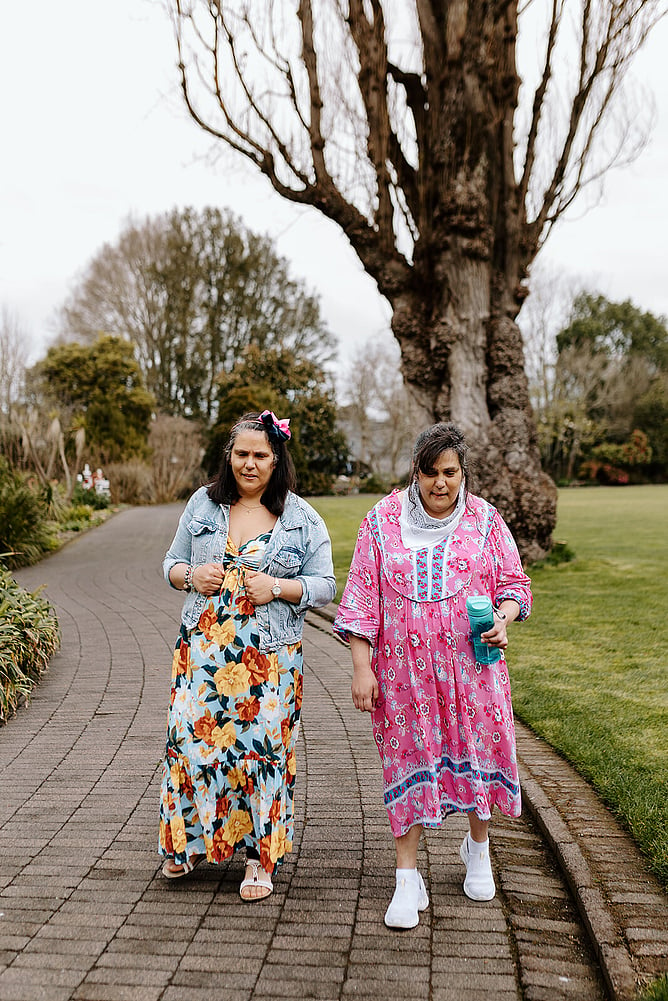
Amanda & Sonia today photo taken by: https://www.hollyfulforthphotography.co.nz/
Why I Share This Story
The goal of my blog is to share parts of my journey to encourage others walking similar paths.
There is no one "right way" to navigate this journey, but together we can share stories, inspire each other, lift each other up, and hold onto hope.
If you're holding your own "brown envelope" today — whether it's a diagnosis, a devastating assessment, or news that changes everything — I want you to know:
● You are not alone.
● Your grief is valid.
● Your questions are understandable.
● There is hope, even when it feels distant.
The journey is long and complex, but you don't have to walk it alone.
Let's Connect
Let's Connect
I would love to hear from you.
What questions do you have? What parts of my journey resonate with you?
Let's start a conversation — together, our stories have the power to connect, heal, and inspire each other.
Reach out directly: sandra@authenticconnection.co.nz
Author, Sandra - Mum to Amanda and Sonia, registered social worker, and co-founder of Authentic Connection,”